Surgam

The Philolexian Foundation
In service to the Philolexian Society of Columbia University · Founded MDCCCII
In service to the Philolexian Society of Columbia University · Founded MDCCCII
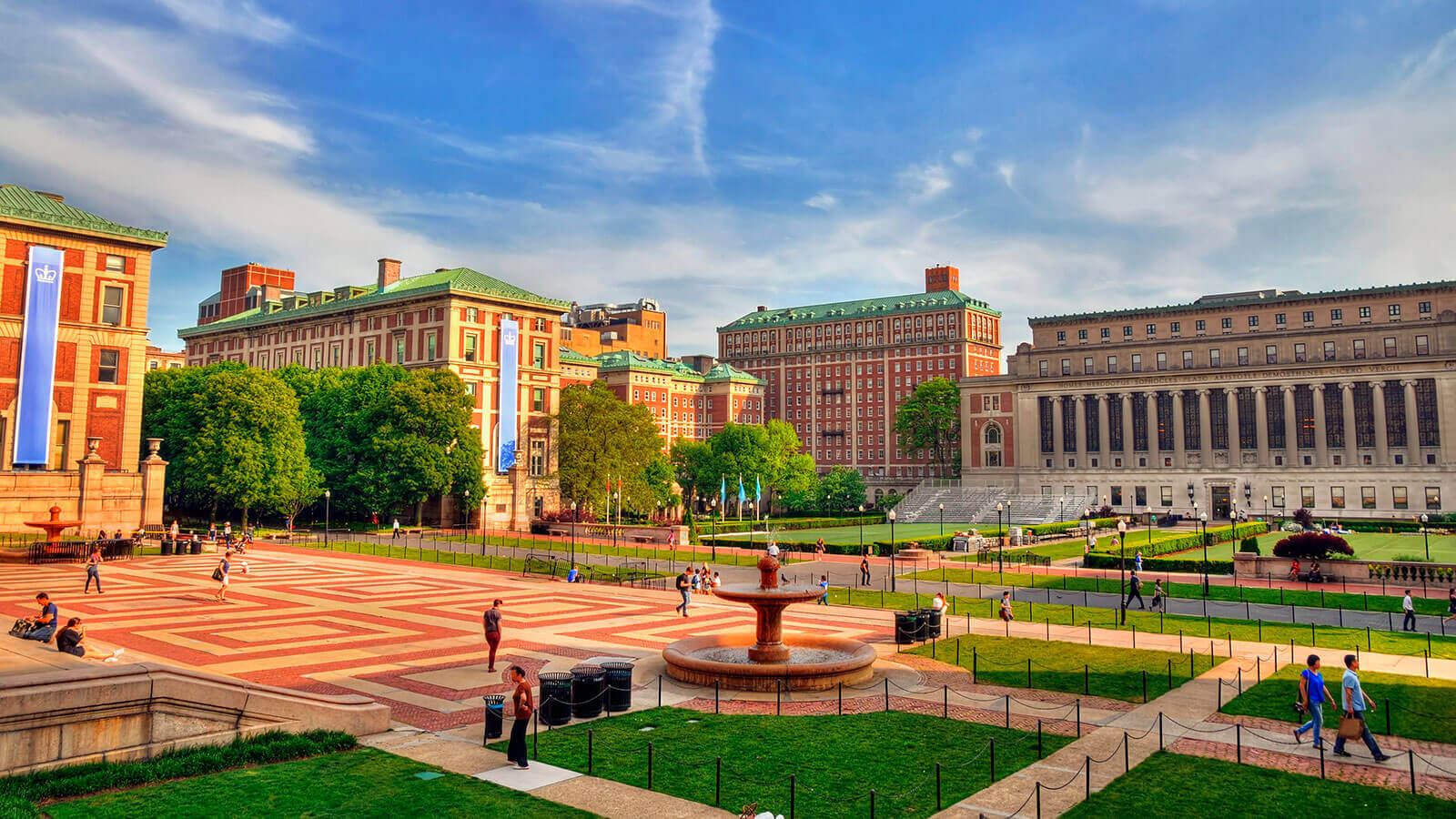
↑ Homepage hero. Real Columbia campus photograph from the project folder, with a navy-tinted gradient overlay so display type stays readable.
↑ Stylized masthead. The actual Surgam logo from the project folder is now the seal. Columbia Blue and Columbia Navy do the structural work; oxblood appears only on the Surgam motto and the kicker.
Heritage rationale. Columbia's school colors descend from "Philolexian Blue" and "Peithologian White." The Society contributed them; the site puts them at the center. Oxblood is demoted to a ceremonial accent — the seal, the Surgam motto, and award flourishes only.
Philolexian was officially established at Columbia College on May 17th, 1802, by the son of Alexander Hamilton and a small cohort of his classmates. Hamilton himself, then a trustee of the College, attended some of the earliest meetings; the Society was modeled, in form and ambition, on his own student literary club at King's College a quarter-century before. The duel of July 1804 ended his direct involvement, but the lineage holds, and the original parchment scrolls bear his son's signature near the top.
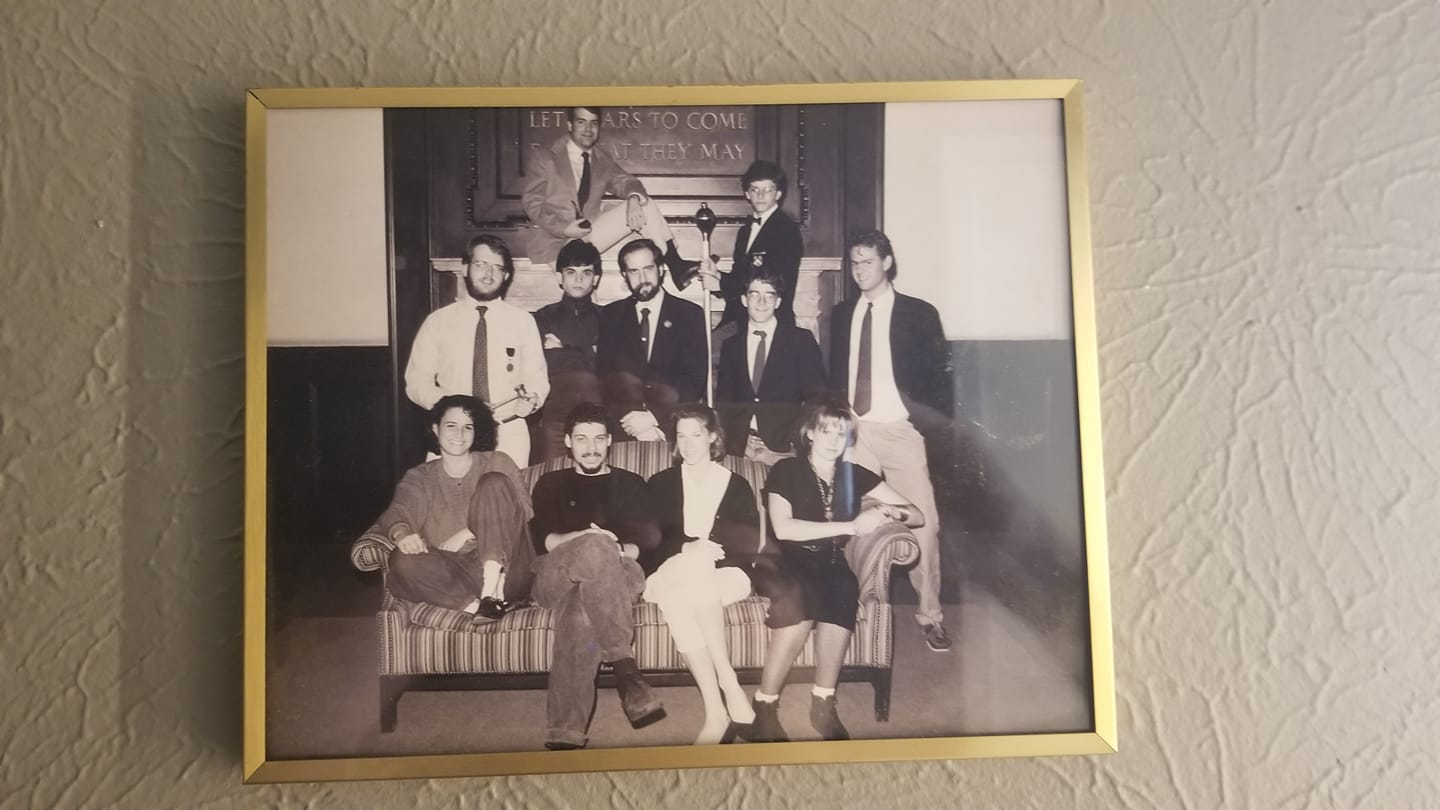
↑ Photo treatment: white surface, Columbia Blue outer frame, thin oxblood inner frame (the only ceremonial use of oxblood at this scale), italic Garamond caption.
❦Jacques Barzun, Class of 1927
From Dawn to Decadence: 500 Years of Western Cultural Life
Awarded in absentia, April 16, 2011. Historian, Society "Avatar"-tier figure, Philo president, lifelong eminence in literary scholarship; received the Society's highest honor at the age of 103.
❦Carol Guess, Class of 1990
Doll Studies: Forensics
Poet, novelist, and professor at Western Washington University; recognized for a body of work in poetry and prose that "honors the deeply unserious by treating it with the deepest seriousness."
Alexander Hamilton
Founding patron · Treasury Secretary · trustee at the Society's 1802 founding
Hamilton's Philolexian connection runs through three generations of the same record. As an undergraduate at King's College in the mid-1770s he was a member of an unnamed student literary society — the spiritual antecedent of the Society proper, modeled on Old World debating clubs and concerned, characteristically, with whether the colonies should declare independence. A quarter-century later, as a Columbia trustee, he is reported to have attended some of Philolexian's earliest meetings; his son James Alexander Hamilton (Class of 1805) was the formal founder and a member of the first cohort.
The Burr duel of July 1804 ended his direct involvement, but the lineage held: the original parchment scrolls bear his son's signature near the top, and the Society's debating form is a recognizable descendant of his own student club.
Inter-society debate travel makes Hamilton's death sweetly fraught. Aaron Burr (Cliosophic, 1772) shot him; James Madison (Whig, 1771), on the other hand, co-authored the Federalist Papers with him. The running ledger between Philo and Whig-Clio more or less zeroes out.
Joyce Kilmer
"I think that I shall never see / a poem lovely as a tree." Killed at the Second Battle of the Marne.
Kilmer was a fixture of the Society in his Columbia years and, by all accounts, a central figure in its early-twentieth-century revival. The Joyce Kilmer Memorial Bad Poetry Contest, the Society's most public-facing tradition, was named in his honor — partly in tribute, partly in mild inversion, in keeping with the Society's habit of taking everything seriously and absurdly at the same time.
"Trees" was published in 1913 and has been admired, parodied, and committed to memory by approximately every American since. Kilmer himself wrote of poetry as a sacred craft, which is what makes the annual contest in his name a perfect Philolexian artifact.
Per the Constitution, the Society is run by a Moderator and an inventive bureaucracy that exceeds the strict needs of a literary society and is the better for it.
First two cards are real demos — clicking Buy on Amazon downloads an actual PDF from the project folder. Trees is the natural inaugural title (Kilmer, CC 1908). For Citizen Kane: Herman J. Mankiewicz (CC 1917) was the Philolexian; Orson Welles co-wrote the screenplay but had no Columbia connection. The author line credits both and only marks Mankiewicz with a class year.
The Foundation stewards funds for the student Society, the awards program, and the search for a permanent home. Every gift is tax-deductible; designate it where you like.
A Standing Campaign of the Foundation
Philolexian holds, in the trust of its alumni, a small but consequential collection: first editions and signed copies of works by Philolexians, the founder of Thom McAn's first pair of shoes, the Society's ceremonial robes, the original parchment scrolls, and Yorick's skull (still in regular use at weekly debates). The Foundation has been working with university and college administrators for years on the question of where, on a famously space-constrained urban campus, this material might come to rest.
Charlie ran the Society in the third year of its second wilderness, and ran it with the conviction of a man who suspected the lights might go out at any moment. He insisted, against considerable inertia, that meetings begin precisely on the hour and end strictly when the wine ran out — an arrangement so plainly correct that no Moderator since has dared revise it. His weekly speeches on procedure were a study in elaborate seriousness; his contempt for elaborate seriousness, in equal measure, made him a Philo to the marrow.
All submissions are reviewed by a moderator before publication. Please write in the spirit of the Society — affectionate, particular, and unsentimental.
By submitting, you grant the Foundation permission to publish, edit lightly for length and clarity, and archive your tribute. You may withdraw it at any time by writing to the Cryptkeeper.
Submit for Review